Wastewater Treatment Plant Graz
Here you will find all the info about our Wastewater Treatment Plant Graz in Graz-Gössendorf and on the disposal of grease separators.
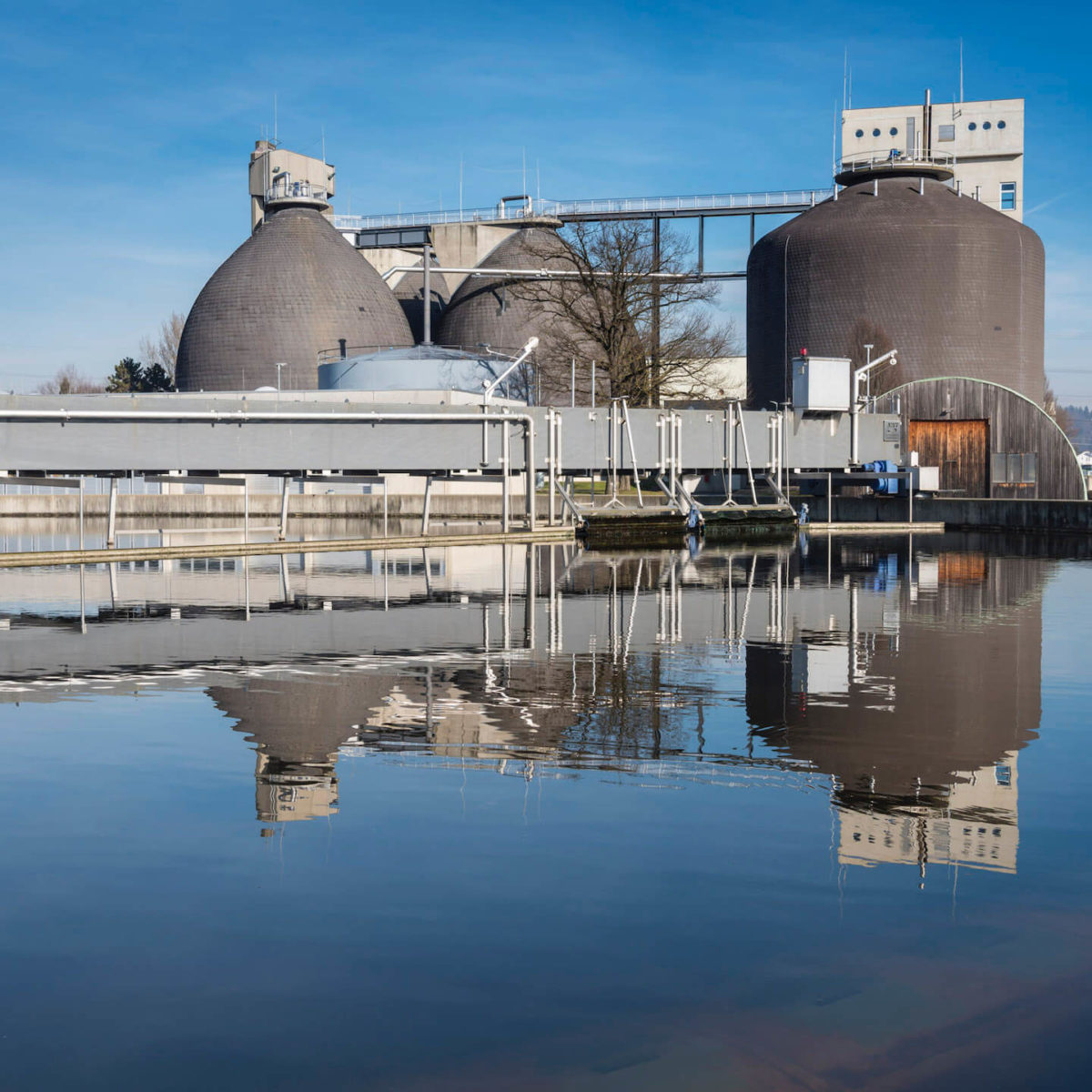
Wastewater Treatment Plant Graz
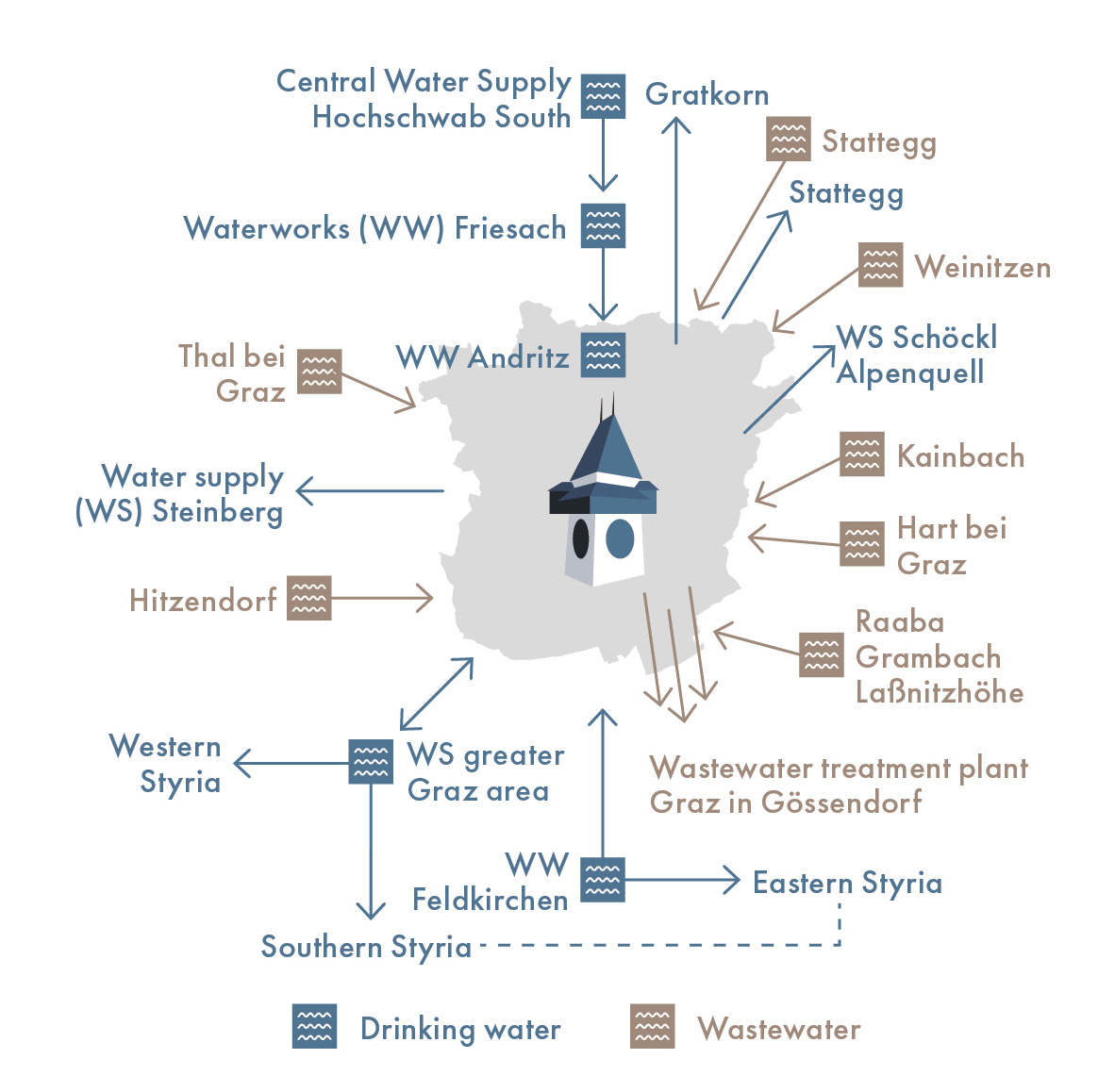
The City of Graz’s wastewater treatment plant in Gössendorf is a key component of the city’s infrastructure. It treats the wastewater from the City of Graz and numerous surrounding municipalities, thereby making a significant contribution to the protection of the River Mur and to the quality of life in the region.
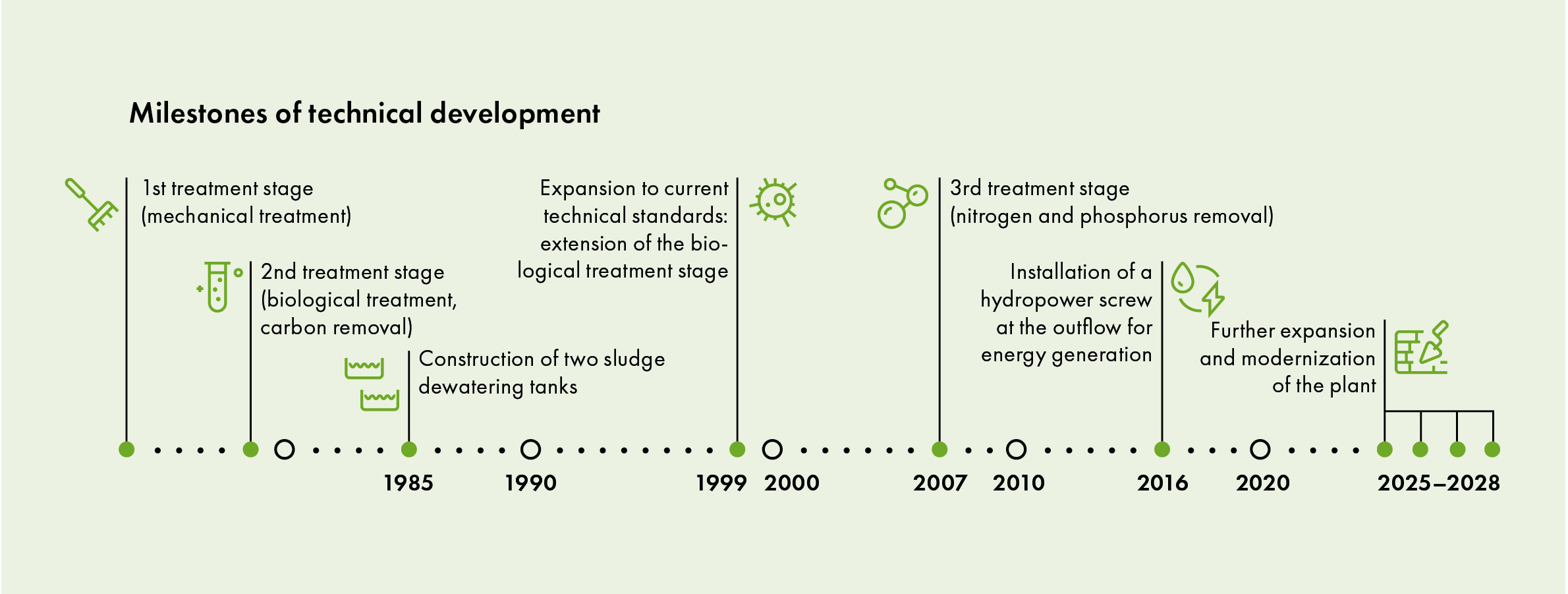
Since its construction, the plant has been continuously expanded and upgraded to the latest technical standards. Today, it operates using modern mechanical, biological and advanced treatment stages and is one of the most efficient plants in Austria. Many parts of the plant have been in continuous operation for years and have proven their worth.
To ensure it can continue to fulfil its functions, our sewage treatment plant is now being expanded (see below for details).
Delivery to the treatment plant:
- Takeover of collecting pit contents: €4.55/m³ (incl. 10% VAT)
- Takeover of fats, sludge from small sewage treatment plants, contents of mobile WC systems: €34.16/m³ (incl. 10% VAT)
The delivery can only be done via licensed companies.
Takeover times: Mon. – Fri., 7 am until 3 pm (working days)
The minimum volume accepted is 1m³.
Expansion of the wastewater treatment plant:
In recent years, the overall conditions have changed significantly: the population is steadily growing, while technical and regulatory requirements for wastewater treatment are becoming increasingly stringent.
The existing capacity reserves of the plant have now been fully utilized. To ensure safe, stable and environmentally sound wastewater treatment in the future, the facility is being comprehensively expanded and modernized.
Expansion as a continuation of the existing plant
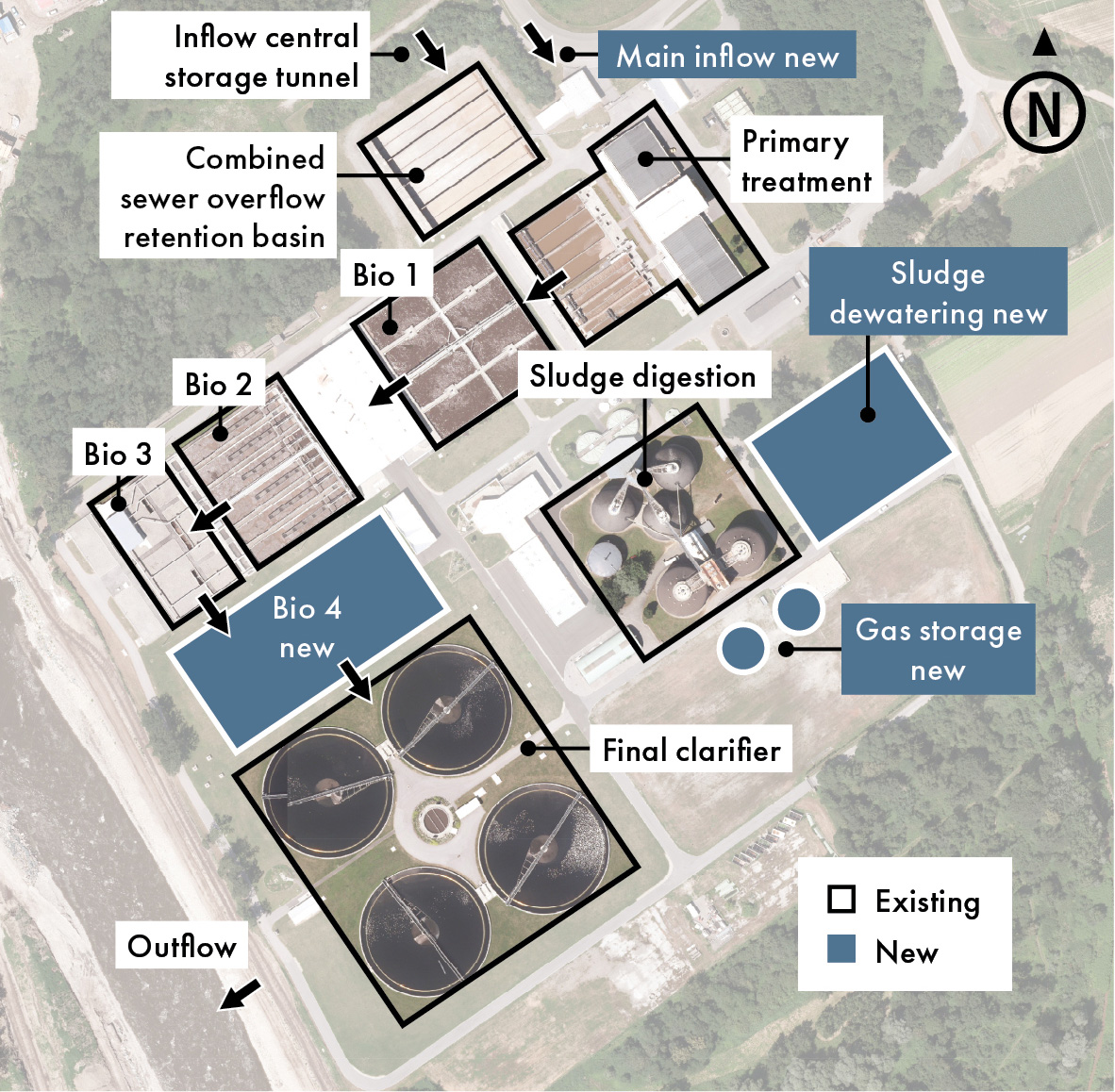
The expansion builds directly on the existing infrastructure and develops it further in a targeted way. The treatment capacity will increase from approximately 500,000 to 815,000 population equivalents.
A key element of the project is the construction of an additional aeration basin with a volume of around 32,000 m³, significantly enhancing the biological treatment process. At the same time, existing equipment—including pumps, machinery and technical units—will be renewed and upgraded to state-of-the-art technology.
This is not a completely new facility, but a consistent further development of the existing plant.
New requirements – modern solutions
In addition to population growth, new regulatory requirements also play an important role. At the European level, wastewater regulations have recently been significantly tightened.
These include:
- improved removal of nutrients such as nitrogen and phosphorus
- the introduction of an additional treatment stage for removing micropollutants and microplastics (4th treatment stage)
- stronger integration of wastewater treatment, sewer systems and stormwater management
These requirements are already being incorporated into the expansion to ensure long-term compliance.
Digitalization and smart control
The treatment plant is not only becoming larger, but also smarter: modern control systems enable real-time monitoring and optimization of both the plant and the sewer network.
In addition, decentralized storage capacities are being expanded and complemented by so-called “blue-green infrastructure” measures. The aim is to reduce the inflow of rainwater into the sewer system and further minimize combined sewer overflows.
Energy efficiency and security of supply
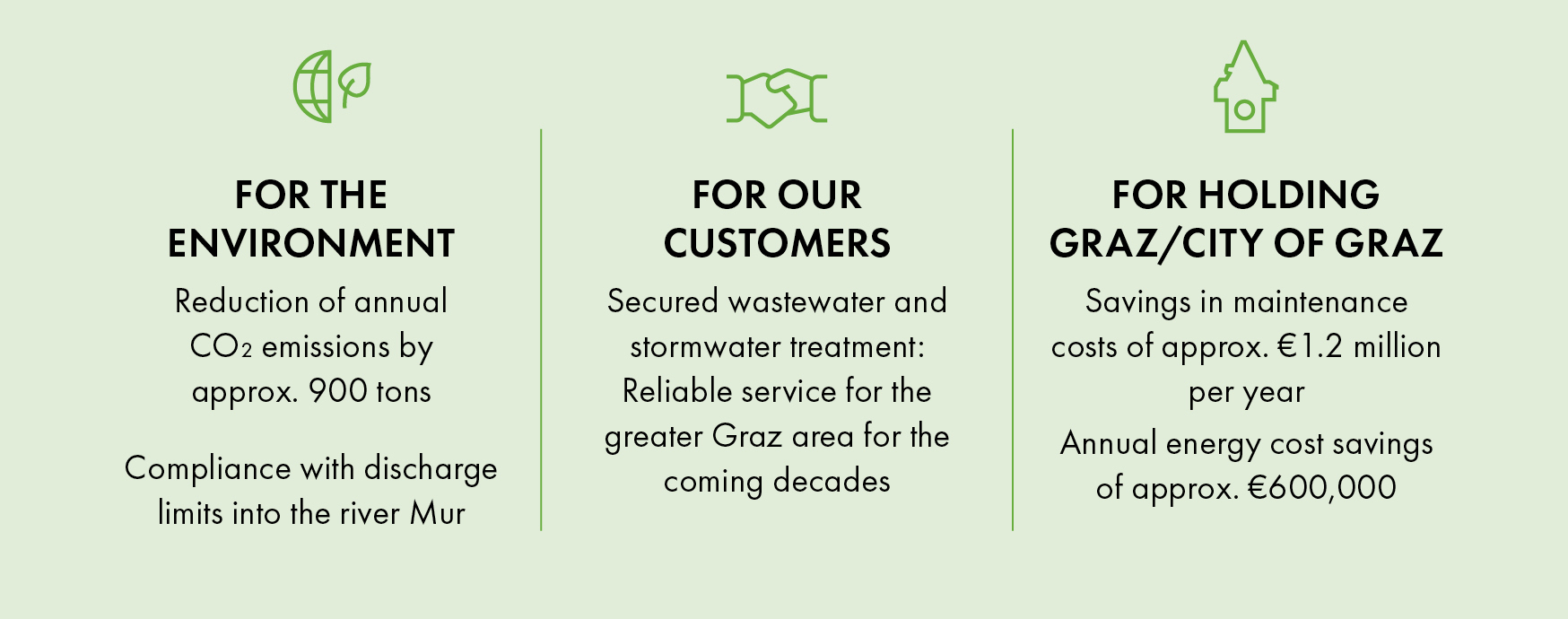
The existing plant already operates in an energy-efficient manner and uses biogas for its own energy supply. These strengths will be further developed as part of the expansion:
- reduction of CO₂ emissions by around 900 tonnes per year
- expansion of energy generation and storage
- use of photovoltaic potential
- ensuring operation even during power outages through emergency power systems
The high level of energy self-sufficiency will therefore be maintained in the future.
Project timeline and outlook
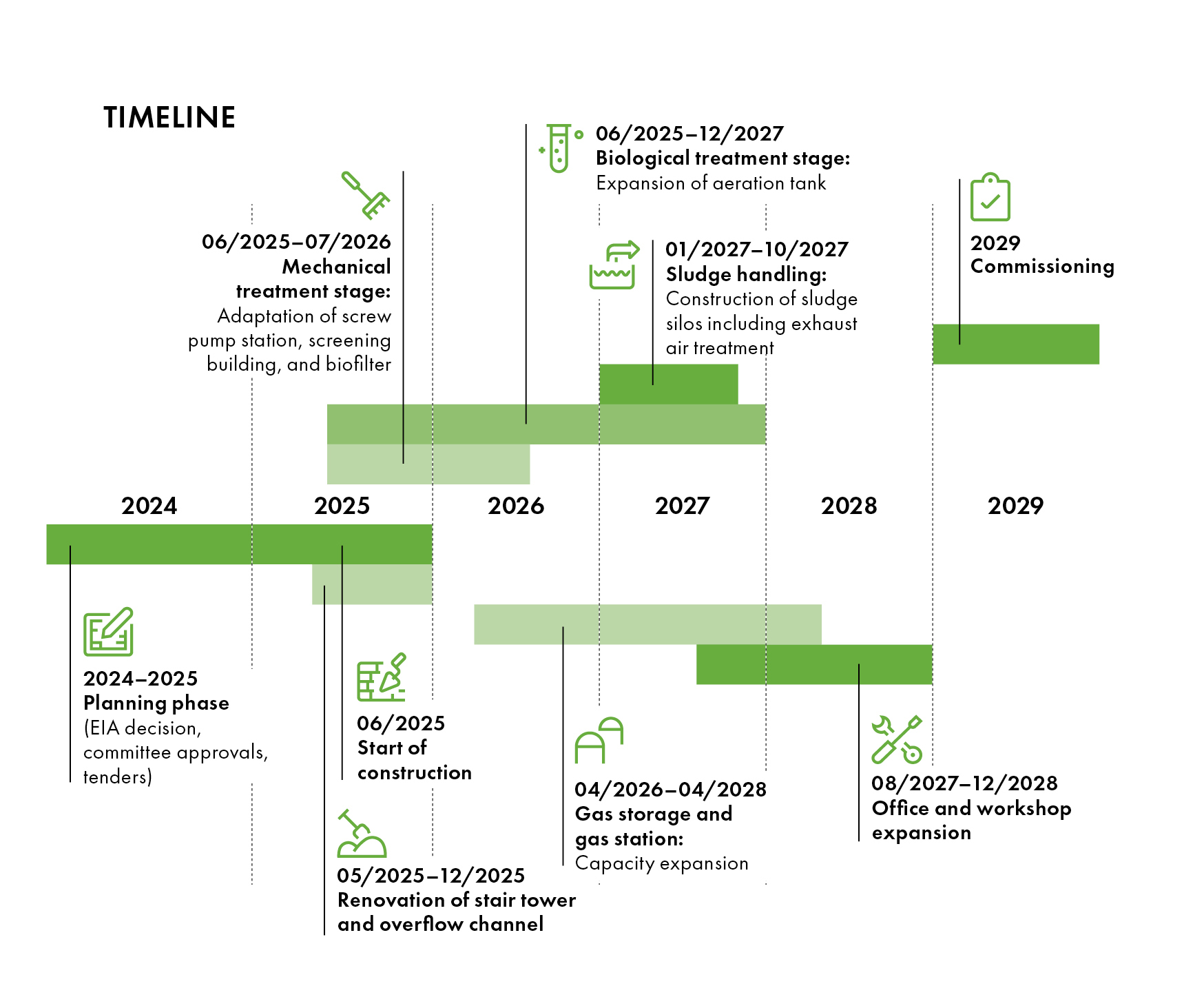
Construction will take place from mid-2025 to the end of 2028 while the existing plant remains in operation. Commissioning is planned for 2029.
With this expansion, the Graz wastewater treatment plant will be secured for the long term and prepared for future challenges—serving as a modern, efficient and sustainable infrastructure for a growing city.
Grease separators
- Owners of grease separators can have the fat residues and flotation sludge removed by authorised waste disposal companies and taken to the wastewater treatment plant of the city of Graz.