A reliable drinking water supply for Graz
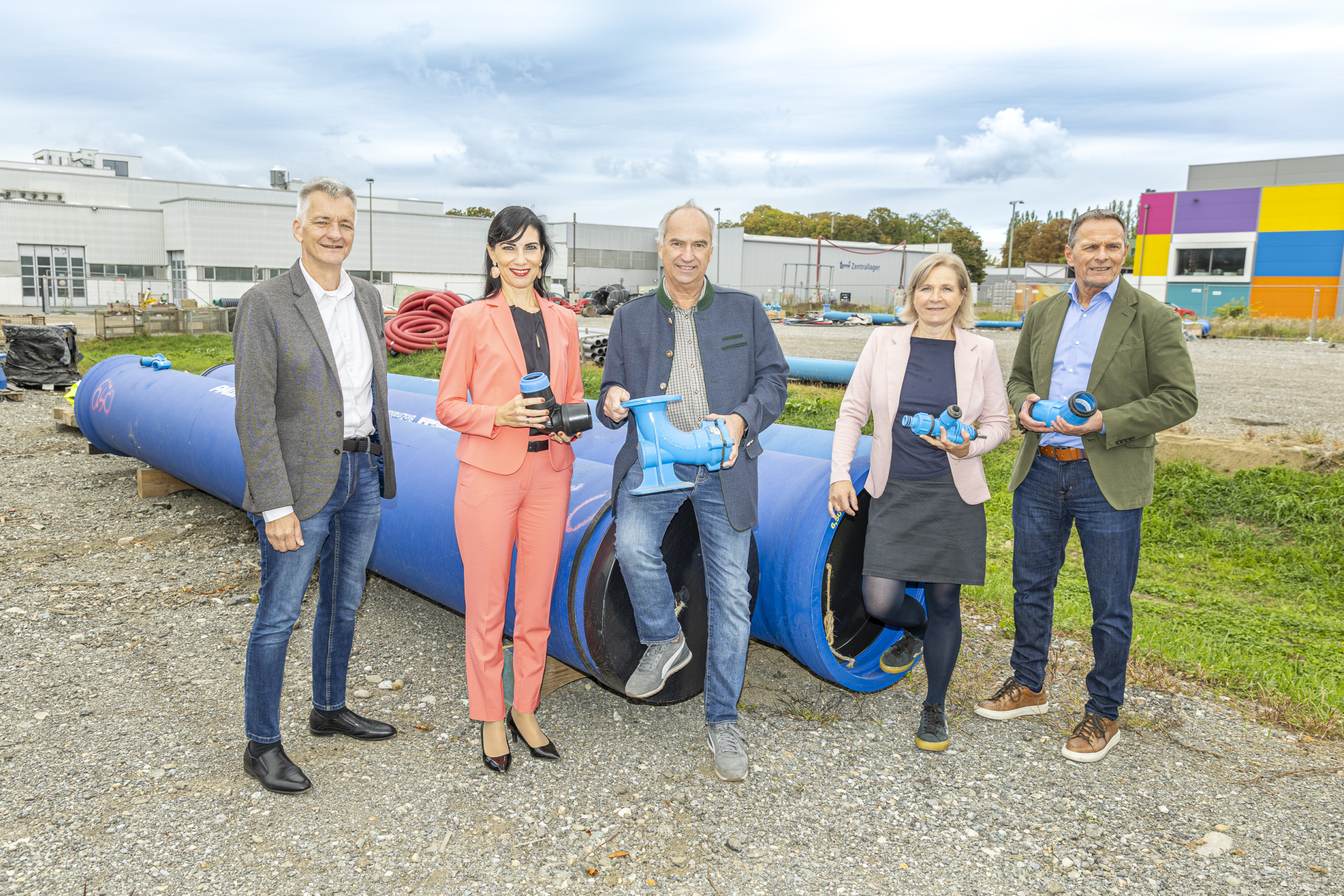
Approximately 6.8 kilometres long, 700 millimetres in diameter and accounting for up to 50 per cent of Graz’s water demand: the refurbishment of the TL700 transmission pipeline marks a comprehensive modernisation of one of the most important links in Graz’s drinking water supply. Another key section of the works on Puntigamer Straße was recently completed and has been in operation for several days. In total, Holding Graz is investing around 27 million euros in this major project.
Drinking water must be reliably available at all times – both in everyday life and during periods of exceptionally high demand or potential disruptions. The Feldkirchen waterworks, situated to the south of Graz, plays a central role in this. The drinking water extracted there is transported to the Graz urban area via the TL700. On average, the waterworks and the transmission pipeline cover around 15 per cent of Graz’s daily water demand. At peak times or in the event of disruptions, this proportion can rise to as much as 50 per cent.
A lifeline of Graz’s water supply is being renewed
The existing transmission pipeline was built back in 1950 and is therefore more than 75 years old. The old pipeline consists of grey cast iron pipes with socket joints. As it has aged, it has become increasingly prone to damage. At the same time, parts of the historic route run across private land and in the immediate vicinity of residential buildings. The comprehensive renewal therefore not only creates a modern technical infrastructure but also improves long-term operational safety.
The new TL700 runs from the Feldkirchen waterworks to the Lagergasse/Karlauergürtel area and is around 6.8 kilometres long. It takes its name from its pipe diameter of 700 millimetres. The renewal is being carried out in sections: in 2025, around 50 per cent of the new pipeline between Karlauergürtel and Gasrohrsteg was laid and commissioned. The second section, from Gasrohrsteg to the Feldkirchen waterworks, was completed in mid-October 2026 and commissioned on 21 October 2026.
Between 7 April and 3 July 2026, a new DN 300 connecting pipeline was constructed between the Puntigamer Bridge and Puchstraße. It links the new transmission pipeline to the existing supply pipelines, thereby ensuring the continued supply to the western part of Graz. The works were co-ordinated with the district heating pipeline, which was being constructed at the same time. This enabled two major infrastructure projects to be coordinated both in terms of timing and technical aspects. It also allowed the impact on traffic to be managed more effectively.
A significant section was constructed along the right-hand side of the Murr cycle path: between the Gasrohrsteg and the area south of the A2, the new drinking water transmission pipeline was laid over a length of around 2.2 kilometres. It was not just the water pipes that were replaced. The construction work was also used to install additional infrastructure for electricity, lighting and telecommunications at the same time.
In total, around 6,800 metres of transmission pipes of various diameters and around 1,300 metres of additional supply pipes were installed as part of the project. In addition, around 5,000 metres of empty conduits for data and power cables were laid. A 20 kV power line approximately 4.5 kilometres long, a fibre-optic cable route approximately 3.3 kilometres long and a lighting cable route approximately 3.5 kilometres long were also part of the coordinated infrastructure works.
The road network was also upgraded as part of the works. The plans included, amongst other things, around 120 new foundations for lighting columns, as well as improvements and modifications to the cycle facilities. In the Rudersdorf area, Energie Steiermark also constructed a concrete wall to provide flood protection.
Combining these various measures made it possible to carry out several infrastructure projects simultaneously and to coordinate the necessary works on roads and open spaces as efficiently as possible.
Construction will continue until summer 2027
Although the completion of the section on Puntigamer Straße marked the completion of an important project milestone and the drinking water pipeline has already been commissioned, further construction work along the approximately 6.8-kilometre-long TL700 is still scheduled until the project’s full completion in summer 2027.
In the first half of 2027, remaining works and site restoration, as well as extensive cable-laying works for a backup supply to the Feldkirchen waterworks, will take place. Once this work is complete, the new TL700 is due to be fully operational in summer 2027, thereby forming a vital, long-term secure connection between the Feldkirchen waterworks and the Graz drinking water network.
More than just a new pipeline
The modernisation of the TL700 forms part of a long-term strategy for Graz’s water resources. Alongside Feldkirchen, the Friesach and Andritz waterworks, as well as the Hochschwab region, form the main pillars of Graz’s drinking water supply. In addition, Graz has a second major transmission pipeline from the north, the TL900. This means that the supply is supported by several water resources and transmission routes.
The importance of this infrastructure is particularly evident at peak times: when water demand rises significantly or another supply route is temporarily unavailable, the connection from Feldkirchen can take on a much larger share of the supply.
Circular economy for new and old pipes
In its renewal programme, Holding Graz is committed to a consistent material cycle. The new pipes are supplied by Tiroler Rohre GmbH (TRM) and consist of 100 per cent recycled material. Only recycled steel scrap is used as the raw material. The new pipes can also be fully recycled again at the end of their service life.
The material from the old pipeline also remains in the cycle: around 250 tonnes of cast iron are generated during dismantling. This is taken over by TRM, processed and returned to the industrial recycling cycle. Over a distance of around 1,300 metres, the new route follows the old pipeline’s path, making it possible to dismantle the historic pipeline in that section.
Nature is also being taken into account
The renewal of the TL700 is also being carried out in conjunction with measures to protect nature and the landscape. Around 80 trees will need to be removed to make way for the new route. In return, 190 new trees are to be planted. In addition, bats and reptiles found in the affected area will be professionally relocated.
This means that this major project is not merely about renewing a pipeline that is several decades old. It is about infrastructure that enhances security of supply in the long term, makes efficient use of existing resources and, at the same time, takes into account the handling of materials and interventions in the natural environment.
Investment in security of supply
Holding Graz is investing around 27 million euros between 2025 and 2028 to renew the central transmission pipeline. This will modernise an infrastructure that has served as a vital link between the Feldkirchen waterworks and the Graz urban area for more than seven decades.
The gradual completion of the new TL700 will thus fulfil a key prerequisite for ensuring that Graz continues to have an efficient and resilient drinking water supply in the future.
Facts and figures about the TL700