Airport: New airlines and winter timetable
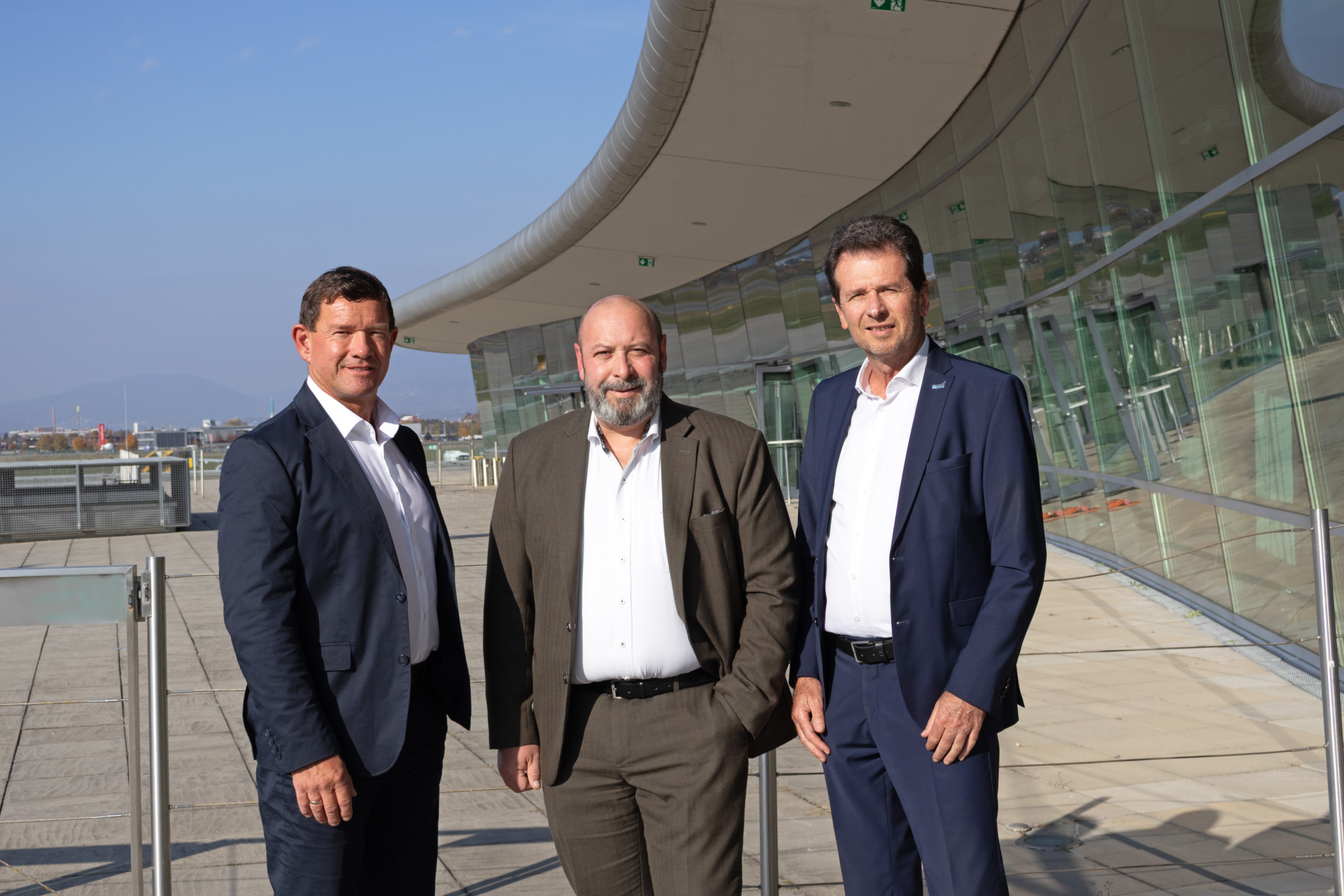
At today’s press conference, the two managing directors of Graz Airport, Wolfgang Grimus and Jürgen Löschnig, together with Mark Perz, a member of the Holding Graz board, took stock of current developments in the aviation sector and at the airport in particular.
Here is all the information at a glance:
On the general situation in (Austrian) aviation:
The aviation sector is facing major challenges due to the geopolitical upheavals in the Middle East. Kerosene prices have more than doubled within a short space of time. This is a major problem for airlines. To make matters worse for Austria as an aviation hub, government-imposed taxes and levies in Austria have risen by 85 per cent since 2019 – far exceeding inflation – whilst airport charges have increased by only 22 per cent.
This is also having an impact on Graz Airport. Many airlines are adjusting their services due to cost pressures. Despite service reductions and the discontinuation of certain destinations, Graz Airport has managed to counteract this trend on many routes. Passenger figures for 2026 are forecast to be around 810,000, only slightly below the previous year’s figure.
To enable growth and strengthen international competitiveness, we need framework conditions that go beyond the relief measures announced by the Ministry of Transport (BMIMI) for the aviation sector, amounting to €30 million each for 2027 and 2028. Above all, there is an urgent need for relief from the air passenger duty, which no longer exists in most European countries.
“At present, only two of Austria’s six commercial airports are reporting positive passenger figures. Airlines are cutting back on their services or moving away altogether, which has negative consequences for the economy and tourism,” explains Wolfgang Grimus, Managing Director of Graz Airport. “We are therefore calling for the abolition, or at least a significant reduction, of the air passenger duty so that we can succeed in the face of international competition.”
Mark Perz, Executive Director of Holding Graz: “Graz Airport is far more than just a place of departure and arrival – it is a lifeline for our business community, a gateway to the international world and a key driver of tourism. Our task is to strengthen its competitiveness in the long term, to consistently develop its rail and air transport links, and thereby actively secure the future of Graz and Styria.”
The 2026/27 winter timetable, which begins on 25 October and runs until the last Sunday in March, is characterised primarily by city flights and flights to Central European hubs.
City flights and connections to major transit airports:
Eurowings operates flights to the cities of Berlin (3 times a week plus several one-off flights) and Hamburg (2 times a week plus several one-off flights). British Airways operates three flights a week between Graz and London. Lufthansa and Air Dolomiti fly to Frankfurt and Munich several times a day; compared with last winter, seat capacity has been significantly increased on many routes through the use of larger aircraft. SWISS is increasing the number of Graz–Zurich services to seven per week, meaning there is now a daily flight.
This means that passengers travelling from Graz Airport can reach around 200 destinations with just one stopover, even in winter. Sunexpress operates direct flights to Antalya, whilst Corendon Airlines offers a weekly service to the popular holiday destination of Hurghada.
Special and one-off flights:
At the end of October/beginning of November, there are still trips to Istanbul, Palma de Mallorca and Malta. On 4 December, Springer Reisen is flying to Lisbon, and on 20 March 2027, Gruber Reisen is offering an Easter flight to Madrid with an interesting and varied cultural programme.
A preview of summer 2027 with four new airlines:
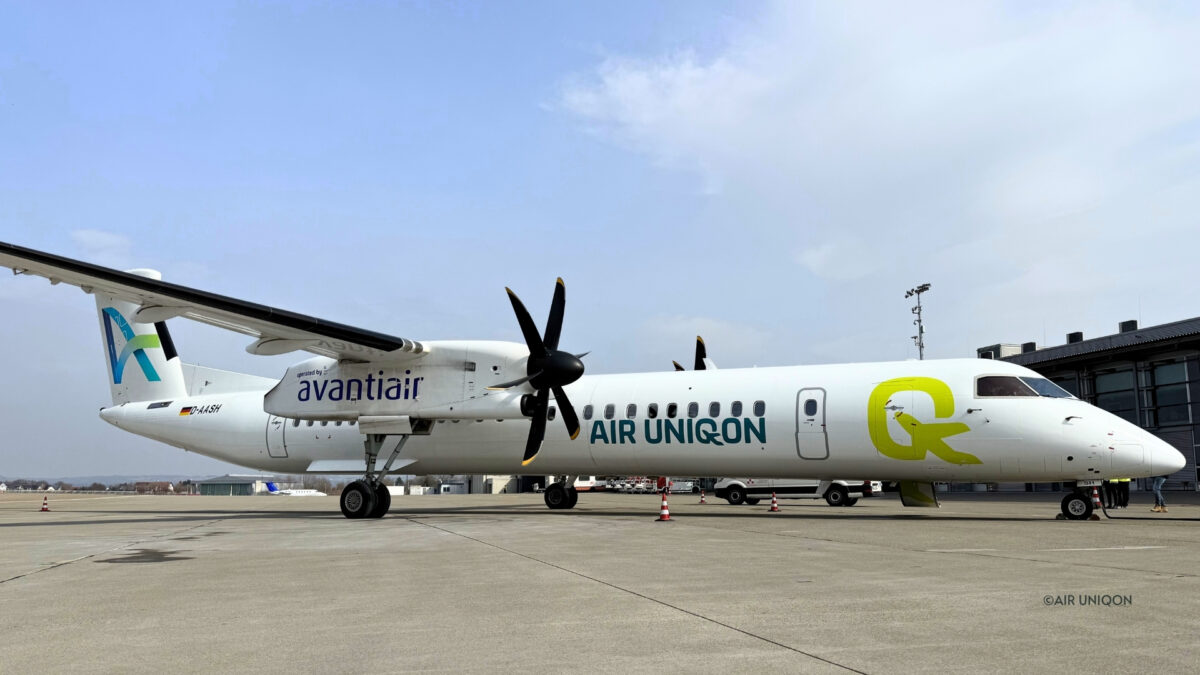
Following the closure of the Eurowings base at Graz Airport, there have been numerous discussions over the past few months with various airlines and tour operators to ensure we can continue to offer a varied holiday flight programme next summer. We have now secured new airline partners for most tourist routes. Eurowings will offer flights to Palma de Mallorca and Karpathos, in addition to its scheduled services to Berlin, Düsseldorf and Hamburg.
Greece’s largest airline, Aegean, is making its debut in Graz with twice-weekly flights to Rhodes. Freebird Airlines has been secured for Heraklion and will operate one flight a week to Heraklion in addition to Corendon Airlines’ service. Hurghada will be served up to twice a week by Air Cairo, the third new airline. Finally, SkyAlps will operate flights to Olbia twice a week. Popular routes such as those to Antalya, Brač, Calvi, Skiathos and Paros remain part of the flight schedule.
In the short-haul and special flights segment, the following destinations are emerging: Catania, Kos, Malta, Monastir, Montpellier, Naples and Montenegro.
As things stand, the scheduled flight timetable will remain unchanged and will include the transit hubs of Düsseldorf, Frankfurt, Munich and Zurich, as well as the major cities of Berlin, Hamburg and London. Discussions are underway with Pegasus regarding the resumption of the temporarily suspended flights to Istanbul.
“Despite the challenging operating environment, we have succeeded in attracting four new airlines to Graz Airport, thereby largely closing the gap created by the reduction in Eurowings’ schedule,” reports Grimus. This means that a portfolio of around 30 destinations will remain accessible directly from Graz in the summer of 2027.
Cargo volumes are performing very well, with a 9.5 per cent increase from January to September. A new record – exceeding 20,000 tonnes in a single year for the first time – appears within reach in 2026. The airport expects a further boost from Lufthansa’s aircraft changeover on the routes to Frankfurt and Munich. As larger aircraft (Airbus A319/320/321) will be deployed on some of these routes from the winter timetable onwards, freight can now also be carried.
On weekdays, up to two daily transport options are available. The expanded service enables faster transit times, greater flexibility and even better connectivity to Lufthansa’s global network.
The expanded service offers faster transit times, greater flexibility and even better connections to Lufthansa Cargo’s global network, particularly for time-sensitive freight.
New public transport links:
As announced by ÖBB last week, the timetable change in December will introduce a new daily direct service between Carinthia and Graz Airport (arriving at 05:15) as well as a service from Graz Airport to Carinthia (departing at 23:33).
Furthermore, from mid-December, trains coming from Maribor will stop directly at Graz Airport. This applies to a total of over 20 trains per day, of which more than 10 are direct services – meaning the journey time between Graz and Maribor is around 50 minutes without the need to change trains.
“We are delighted that, from mid-December, we will have a direct connection to Klagenfurt, even if it is only one train per day in each direction. It would be helpful if the train timings were fine-tuned. However, the new stop for trains coming from Maribor directly at the airport station is a real quantum leap,” says Jürgen Löschnig, Managing Director of Graz Airport.
Key steps towards reducing CO₂ emissions:
Thanks to the widespread use of HVO 100, Graz Airport has been able to reduce its CO₂ emissions from vehicles and apron equipment in recent years. Nevertheless, where necessary new purchases are made, electric models are chosen wherever possible and appropriate. This year, too, various diesel-powered vehicles have been replaced by electric vehicles:
Two mobile ground power units. These are charged at a newly installed charging point, which is powered during the day by the solar panel system on the multi-storey car park. Four further electric ground power units will follow over the next two years.
Two baggage conveyors with an extended conveyor belt, which reduces the physical strain on staff during their work. Two passenger stairs, which are largely self-charging thanks to an integrated solar panel system. A car for the apron coordinator, two cleaning vehicles, a ‘Follow-Me’ bus and a drinking water van have also replaced old diesel-powered vehicles.
Many of the old vehicles were sent for recycling as part of an auction held in August this year. This year, Graz Airport is receiving its twenty-seventh Ökoprofit award.
Structural alterations:
At the start of the year, due to a lack of space and following structural alterations, the Emergency Information Centre and the Command Staff assembly room were relocated to the fire station and put through their first test during the emergency drill this summer.
With the entry into operation of the Entry/Exit System (EES) at Schengen border control points in autumn 2025, it became necessary to adapt the infrastructure for arriving non-Schengen passengers at Graz Airport. Consequently, the areas designated for border control procedures are currently being significantly expanded. This will provide more queuing space in front of the border control points in future; a flexible passenger guidance system will be installed; and new toilet facilities for arriving passengers will be built.
The airport as an events centre:
Once again this year, Graz Airport hosted a wide variety of events. In addition to numerous seminars, conferences and meetings, the following are particularly noteworthy:
“Graz Airport has been very active for many years in developing business models outside the aviation sector. Our events centre, which hosts around 300 trade fairs, conferences, meetings and so on, has established itself particularly well,” says Löschnig.
Photo above: Jürgen Löschnig, Mark Perz, Wolfgang Grimus (from left)